29 Jun
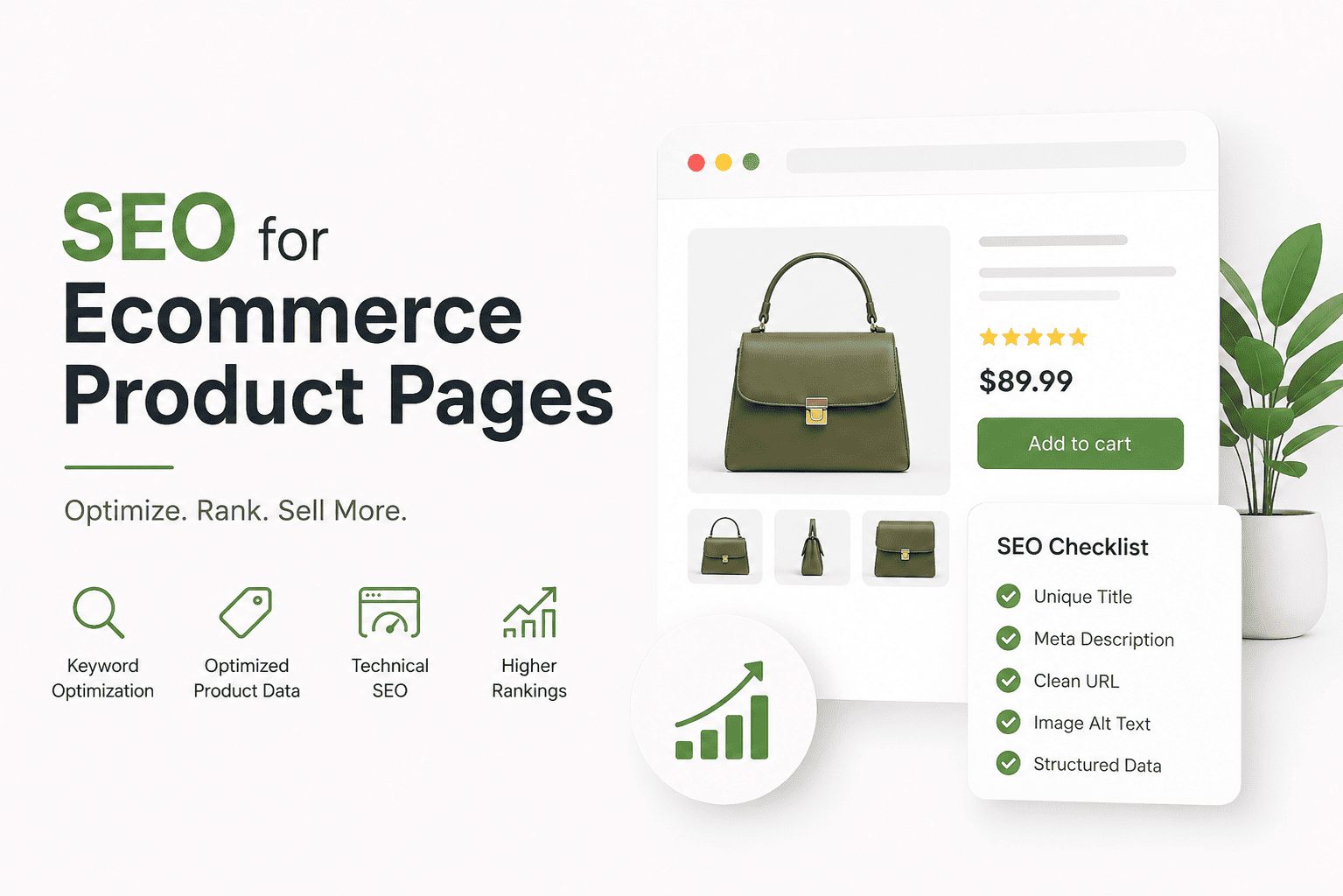
If you sell products online and your traffic is quietly declining, you are not imagining things. Google organic traffic to ecommerce sites dropped by up to 38% in the US between 2024 and 2025. The reason? Shoppers are skipping the search bar entirely and asking AI tools what to buy instead. That shift makes generative engine optimization for ecommerce the most important new skill in your digital marketing toolkit right now.
This guide explains exactly what GEO is, how it differs from traditional SEO, and the concrete steps you can take today to get your products recommended by ChatGPT, Perplexity, and Google AI Overviews.
What Is Generative Engine Optimization for Ecommerce?
Generative Engine Optimization (GEO) is the process of structuring your product content, data, and online presence so that AI-powered platforms can discover, summarize, and recommend your products inside their generated answers.
Think of it this way. Traditional SEO gets your page onto Google’s first page. GEO gets your product mentioned inside the AI’s answer – before the user even sees a list of links.
The platforms driving this change include:
- ChatGPT Shopping – now sending direct product referrals to ecommerce sites
- Perplexity AI – citing authoritative product sources with links
- Google AI Overviews – replacing blue-link results with AI-generated summaries
- Bing Copilot – pulling rich product data for purchase-intent queries
- Amazon Rufus -AI shopping assistant embedded directly in the marketplace
AI-driven traffic to US retail websites grew 693% during the 2025 holiday season, according to Adobe Analytics. Moreover, visitors arriving from AI tools convert 31% better than non-branded organic search visitors. These are not casual browsers. They arrive already sold on a category and looking for the right brand to confirm.
GEO vs. SEO: What Is the Difference?
Many marketers ask: what is the difference between SEO and GEO? The answer is simpler than you think.
SEO optimizes your page so search engines rank it. Success is measured in keyword rankings and organic clicks.
GEO optimizes your content so AI engines cite it. Success is measured in how often your brand appears inside an AI-generated answer.
SEO makes people find you. GEO makes AI recommend you.
Because AI systems synthesize answers rather than listing links, your content needs to be clear, factual, and structured – not just keyword-rich. Ambiguous marketing copy like “premium quality, industry-leading design” gives an LLM nothing to work with. Specific facts like “compatible with all standard kitchen systems” or “fits apartments under 800 square feet” give AI the contextual data it needs to match your product to a buyer’s exact question.
Why Ecommerce Brands Cannot Ignore AI SEO
The numbers make the case clearly. ChatGPT accounted for 20% of Walmart’s total referral traffic and up to 16% of Zara’s inbound traffic between June and August 2025, according to Digiday. For most brands, AI referral volume sits around 0.2% of total ecommerce sessions as of Q1 2026 – but it is growing at over 1,000% annually.
Furthermore, brands that built their GEO visibility early are establishing category authority before competitors even recognize the channel exists. Waiting is not a neutral decision. Every month you delay is a month a competitor earns those citations instead.
How to Optimize Your Ecommerce Store for Generative Engines
1. Implement Schema Markup on Every Product Page
Structured data is the foundation of AI SEO for ecommerce. Pages with complete Product schema are 3.7 times more likely to be cited by AI systems compared to pages without it.
At minimum, every product detail page (PDP) should include:
- Product schema – name, brand, SKU, description, availability
- Offer schema – price, currency, stock status
- AggregateRating schema – star ratings, review count
- Review schema – individual verified purchase reviews
Use JSON-LD format. AI systems treat structured data as “first-class citizens” because it eliminates ambiguity. When a model knows your price, stock status, and specifications with certainty, it recommends your product confidently.
For Shopify merchants, much of this technical integration is handled automatically through Shopify’s catalog syndication. Therefore, your primary focus should be on data quality and content strategy rather than the underlying markup.
2. Write Product Descriptions AI Can Actually Use
Generative engines favor factual density over marketing language. Instead of adjectives, use specifics.
Replace this: “Our premium running shoe delivers outstanding performance.”
With this: “Designed for runners logging 30+ miles per week. 8mm heel-to-toe drop, carbon fiber plate, and reflective upper for low-light training.”
Additionally, add a FAQ section to every major product page. AI engines frequently pull from FAQ content when generating recommendations because it is already formatted as question-and-answer pairs. Base your questions on real customer support tickets, product reviews, and competitor query analysis.
3. Build Topical Authority and Off-Page Signals
For generative engine optimization to work, your brand needs to be talked about beyond your own website. AI models weight external citations and mentions heavily when deciding which brands to recommend.
This means:
- Publishing buying guides – “Best laptops for college students under $800” positions your content as a reference source
- Creating comparison tables – structured comparisons help AI extract and cite your content directly
- Earning press coverage – mentions in credible publications build brand authority that LLMs recognize
- Generating verified reviews – platforms like Perplexity AI weight diverse, verified purchase signals when validating product claims
If your brand consistently appears in eco-conscious product roundups, for example, generative engines begin associating those values with your brand. Over time, this makes you the default recommendation for relevant queries.
4. Apply a Perplexity AI SEO Strategy
Perplexity cites sources differently than Google. It actively surfaces and links to authoritative pages during its answer generation. Therefore, your Perplexity AI SEO strategy should focus on being the most citable source on a topic.
To get cited by Perplexity AI:
- Publish detailed, fact-dense articles that answer specific product questions
- Include verifiable data, statistics, and original research
- Structure content with clear headings so Perplexity can extract sections cleanly
- Make sure your site loads fast and passes Core Web Vitals Perplexity deprioritizes slow sources
- Earn backlinks from publications that Perplexity already treats as authoritative
Credible platforms like Artzen.io cover AI-forward SEO strategies in depth, which is where getting cited by niche-authority sources starts to compound.
5. Optimize for Google AI Overviews Ecommerce Strategy
Google AI Overviews now appear above organic results for many commercial queries. They pull content from pages Google already trusts but the signals differ slightly from traditional organic ranking.
Your Google AI Overviews ecommerce strategy should include:
- Strong E-E-A-T signals – demonstrate real-world expertise and authority on your product category
- Concise, direct answers – open blog sections with a one-sentence answer to the implicit question
- Updated content – AI Overviews favor freshness, particularly for product availability and pricing
- Google Merchant Center sync – keep your product feed updated so AI Overviews can pull live pricing and stock signals directly
6. Track ChatGPT Referral Traffic in Google Analytics 4
You cannot optimize what you cannot measure. However, GA4 does not surface AI traffic clearly by default it buries it inside your general Referral channel.
Here is how to track ChatGPT shopping referral traffic properly:
- Go to Admin > Data Display > Channel Groups in GA4
- Click Create new channel group and add a channel named “AI Traffic”
- Set the condition to Session source matches regex: chatgpt\.com|chat\.openai\.com|perplexity\.ai|gemini\.google\.com|copilot\.microsoft\.com
- Drag the channel above Referral and save
GA4 applies this retroactively. Your Traffic Acquisition report will immediately show AI platforms as distinct channels. Then add Landing Page as a secondary dimension to identify which product pages are being cited most often.
Note: copy-paste visits from AI tools arrive as Direct traffic and cannot be recovered. What GA4 shows you is a minimum count, not the full picture. Your actual AI-driven traffic is higher.
Answer Engine Optimization: The Bigger Picture
GEO sits within a broader strategic shift called Answer Engine Optimization (AEO). This is the practice of making your brand the answer not just a search result across every AI-powered query interface.
For ecommerce, AEO means:
- Your product answers “What should I buy?” queries directly
- Your brand is recommended without the user ever visiting a comparison site
- Your content is the source AI tools cite when they explain your product category
The brands winning in AI search today are not doing anything exotic. They write clearly. They structure their data properly. They earn genuine third-party mentions. Those fundamentals, applied consistently, are what GEO rewards.
Quick GEO Action Checklist for Ecommerce Brands
- Add complete Product, Offer, and AggregateRating schema to all PDPs
- Rewrite product descriptions with specific facts, materials, and use cases
- Add a FAQ section to top product and category pages
- Publish buying guides and comparison content targeting AI-heavy queries
- Set up AI Traffic channel group in GA4 to track ChatGPT and Perplexity referrals
- Sync Google Merchant Center product feed and keep it current
- Build brand mentions and citations across authoritative publications
- Review your E-E-A-T signals and shore up author authority pages
FAQ: Generative Engine Optimization for Ecommerce
What is generative engine optimization for ecommerce?
Generative Engine Optimization (GEO) for ecommerce is the process of structuring product content, schema data, and brand signals so AI platforms like ChatGPT, Perplexity, and Google AI Overviews discover, cite, and recommend your products inside their generated answers – rather than just linking to your page in traditional search results.
How do ecommerce brands get traffic from AI assistants?
AI assistants like ChatGPT and Perplexity generate referral traffic by recommending products in response to shopping queries. Brands earn these recommendations by publishing structured product data (JSON-LD schema), fact-dense product descriptions, FAQ content, and earning third-party mentions from publications that AI models treat as authoritative sources.
What is the difference between SEO and GEO?
Traditional SEO optimizes web pages so search engines rank them in a list of links. GEO optimizes content so AI engines select it when generating a direct answer. SEO measures keyword rankings and organic clicks. GEO measures citation frequency and the quality of AI referral sessions.
How do I track ChatGPT traffic in Google Analytics 4?
In GA4, go to Admin > Data Display > Channel Groups and create a custom channel group. Set a regex condition to match chatgpt\.com|chat\.openai\.com|perplexity\.ai and similar AI domains. Drag this above the Referral channel and save. Your Traffic Acquisition report will then separate AI traffic from other referrals — though copy-paste visits will still appear as Direct traffic.
How do I get my products recommended by Perplexity AI?
To get products recommended by Perplexity, publish fact-dense, clearly structured content that directly answers buyer questions. Include verifiable data and earn citations from publications Perplexity already cites. Implement complete schema markup on product pages, ensure fast page load speeds, and make sure your brand has credible, consistent mentions across the web.
How do I optimize a Shopify store for ChatGPT?
For Shopify stores, start by ensuring your product descriptions are specific and factual rather than promotional. Add FAQ sections to product pages. Keep your Google Merchant Center feed current so ChatGPT Shopping can pull accurate data. Shopify’s catalog syndication handles much of the technical discovery layer so the primary focus is data quality, content depth, and off-site brand authority.
Do I still need traditional SEO if I focus on GEO?
Yes. GEO complements SEO; it does not replace it. Many of the same fundamentals apply: technical site health, authoritative content, quality backlinks, and E-E-A-T signals. However, GEO adds a new measurement layer (AI citation frequency) and a new content format priority (structured, factual, question-answering content). Running both strategies together gives you maximum visibility across traditional and AI search channels.

Artzen is a performance-driven agency specializing in ecommerce SEO services in India. Backed by years of industry experience and a team of certified, highly skilled SEO specialists, we implement strategies with precision and measurable growth. We prioritize our clients at every stage, delivering results that exceed customer expectations.