14 May
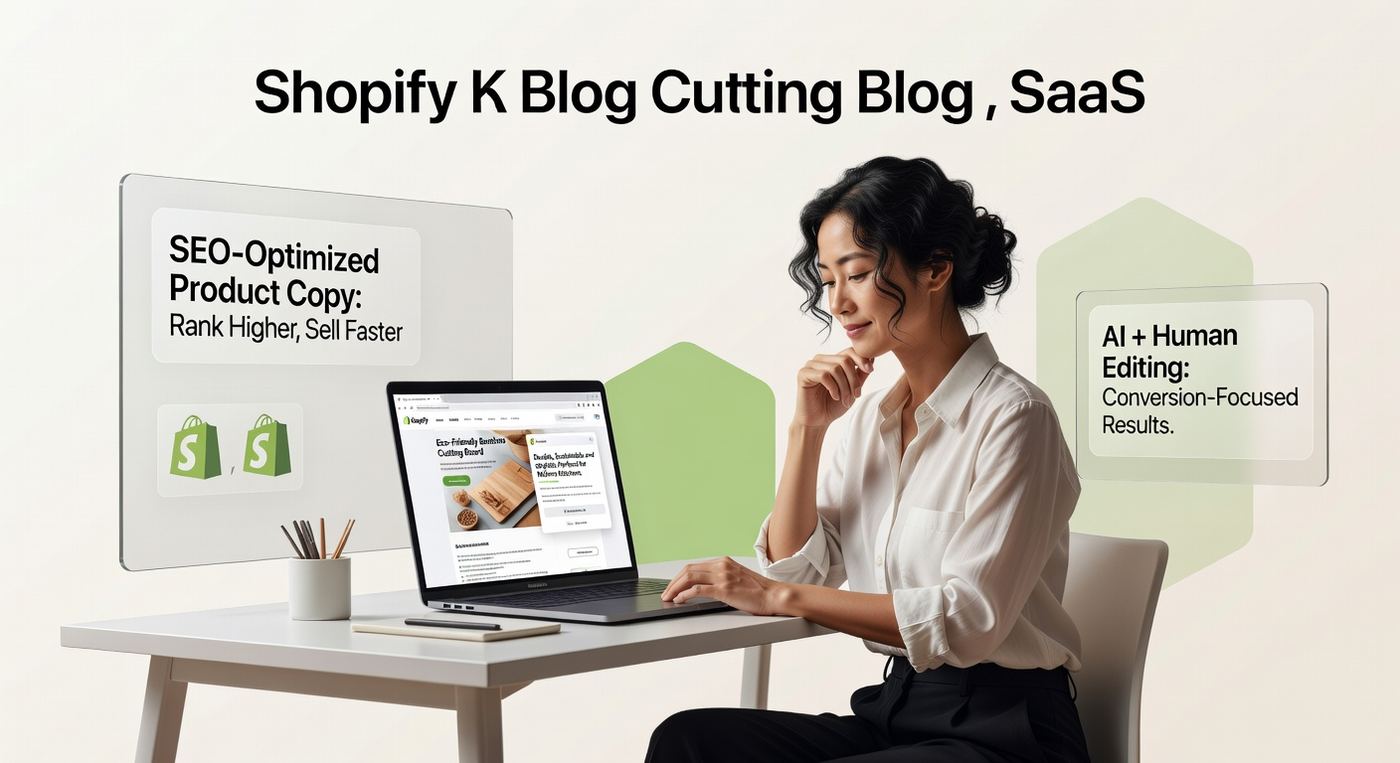
Most Shopify store owners write product descriptions like this: “High-quality leather wallet. Brown. Durable. Great for everyday use.”
That is not a product description. That is a sad paragraph that helps no one not your customer, not Google, and definitely not your conversion rate.
Here is the good news. ChatGPT has made it genuinely easy to write Shopify product descriptions that are benefit-driven, SEO-optimized, and built to convert. You just need the right approach, the right prompts, and a clear understanding of what actually works in 2026.
This guide covers exactly that.
Why Your Shopify Product Descriptions Are Losing You Money
Before jumping into ChatGPT prompts, let us talk about what is actually at stake.
According to Nielsen Norman Group’s research on ecommerce usability, poor product copy is one of the top reasons shoppers abandon product pages. People do not buy what they cannot understand. And search engines do not rank what they cannot interpret.
A weak product description fails on three levels at once:
- It fails to inform the buyer.
- It fails to persuade them to act.
- It fails to give Google enough semantic context to rank the page.
That is a triple loss for one paragraph of text. ChatGPT, used correctly, can fix all three at the same time.
How to Write Shopify Product Descriptions with ChatGPT
Using ChatGPT as an AI product description generator for Shopify is not about typing “write a product description for my wallet” and copy-pasting whatever comes out. That approach produces generic output that reads like every other store.
The real method involves structured, context-rich prompts.
Build a Prompt That Includes Real Context
The quality of your ChatGPT output depends entirely on what you give it. Garbage in, garbage out that rule has not changed.
A strong Shopify product description prompt should include:
- Product name and category
- Key features (material, size, specs)
- Core benefits (what problem does it solve?)
- Target audience (who is buying this and why?)
- Tone of voice (formal, casual, playful, technical?)
- SEO focus keyword you want to rank for
- Word count target (typically 150–300 words for most Shopify products)
Here is a practical example of a well-built Shopify product description prompt:
“Write a 200-word Shopify product description for a slim leather bifold wallet made from full-grain Italian leather. The target buyer is a professional male aged 28–40 who values minimalist design and quality. Highlight the durability, slim profile (holds up to 8 cards), and RFID-blocking protection. Use a confident, premium tone. Include the keyword ‘slim leather bifold wallet’ naturally in the first 50 words. End with a subtle call to action.”
That prompt gives ChatGPT everything it needs. The result will sound human, stay on-brand, and target the right keyword without stuffing it awkwardly.
Use the AIDA or PAS Framework in Your Prompts
Two classic copywriting frameworks work extremely well when embedded into ChatGPT prompts for ecommerce products.
AIDA (Attention, Interest, Desire, Action) is great for premium or lifestyle products. You capture attention with a bold statement, build interest with features, create desire through benefits, and push action with a CTA.
PAS (Problem, Agitate, Solution) works better for functional or problem-solving products. You name the problem the buyer has, make them feel it, then position your product as the fix.
Try prompting ChatGPT like this:
“Write a Shopify product description using the PAS framework for a posture-correcting back brace. Target buyers are remote workers who experience lower back pain. Keep it under 180 words. Include the keyword ‘posture corrector for desk workers.’ Write in a friendly but authoritative tone.”
This type of structured prompt consistently produces conversion-focused product descriptions that feel human rather than automated.
Best ChatGPT Prompts for Shopify SEO
Here are five proven prompt structures specifically built for Shopify SEO product descriptions. Use these as templates, then customize for each product.
1. The SEO-First Description Prompt
“Write a 200-word SEO-optimized Shopify product description for [product name]. Primary keyword: [keyword]. Secondary keywords: [keyword 2], [keyword 3]. Include the primary keyword in the opening sentence. Use natural language throughout. Add a clear benefit statement in the second paragraph. Avoid keyword stuffing. Write for both Google and a real customer.”
2. The Benefit-First Prompt
“Write a Shopify product description that leads with the strongest customer benefit, not features. Product: [product name]. Main benefit: [benefit]. Features to include: [list features]. Tone: [brand tone]. Length: 150–200 words.”
3. The Bullet-Point Hybrid Prompt
“Write a Shopify product description for [product] with two parts: a 100-word opening paragraph focused on customer benefit and emotion, followed by 5 bullet points highlighting key features. Use the keyword [SEO keyword] once naturally in the opening. Avoid passive voice.”
4. The Story-Led Prompt
“Write a short story-style Shopify product description for [product]. Start with a relatable customer scenario, then introduce the product as the solution. Keep it under 180 words. Include the keyword [keyword] naturally. End with a one-line CTA.”
5. The Technical Product Prompt
“Write a detailed Shopify product description for [technical product]. Audience: [specific professional or enthusiast]. Include all key specs in a readable format. Use the keyword [keyword] in the first paragraph. Maintain a professional but accessible tone. Aim for 250 words.”
Shopify Magic vs ChatGPT: Which One Should You Use?
This comes up constantly, so let us address it directly.
Shopify Magic is Shopify’s built-in AI writing tool, introduced in 2023 and expanded through 2024–2025. It generates product descriptions directly inside your Shopify admin dashboard. Fast, convenient, and no separate subscription needed.
ChatGPT (GPT-4o and later models) gives you more control, better contextual understanding, and the ability to write with a specific brand voice or SEO strategy in mind.
Here is the honest breakdown:
| Feature | Shopify Magic | ChatGPT |
| Speed | Very fast | Fast |
| SEO control | Limited | High |
| Brand voice customization | Minimal | Extensive |
| Prompt flexibility | Low | Very high |
| Best for | Quick first drafts | Final, optimized copy |
For small catalogs or quick drafts, Shopify Magic works fine. For stores that take SEO seriously or have products that need real conversion copy ChatGPT with proper prompts consistently produces better results.
Many experienced Shopify merchants use Shopify Magic for a rough first pass, then refine the output in ChatGPT with a structured SEO prompt. That hybrid workflow saves time without sacrificing quality.
How to Optimize Shopify Product Pages with AI in 2026
Writing the description is only one part of the page optimization puzzle. If you want to rank on Google AND on AI-powered search engines (increasingly important in 2026), you need to think about the full product page.
Add Structured Data with JSON-LD
Google uses structured data schema JSON-LD to understand your product pages deeply. When you mark up your product with schema including price, availability, reviews, and description Google can display rich results in search, including star ratings and price directly in the snippet.
Shopify themes often handle basic product schema automatically, but many stores miss out on Review, AggregateRating, and BreadcrumbList schema. Adding these increases your search visibility significantly, according to Google’s own Search Central documentation.
Write for Generative Engine Optimization (GEO)
This is new and most Shopify stores are not doing it yet.
Generative engine optimization (GEO) refers to optimizing your content so it gets cited or recommended by AI-powered search tools like Google’s AI Overviews, Perplexity, and similar platforms. These systems pull structured, clear, factual content from pages they trust.
To optimize for GEO on your Shopify product pages:
- Write clear, direct sentences that answer specific buyer questions
- Use headers that match natural search queries (“What is X made of?” or “Is X good for Y?”)
- Include factual specs and source claims where relevant
- Avoid vague marketing fluff AI systems ignore it
Keep Your Descriptions Unique Across Products
Duplicate content across product variants is one of the most common Shopify SEO mistakes. If you sell the same product in five colors and each page uses identical copy, Google will not rank all five it will pick one, probably not the one you want.
Use ChatGPT to write unique descriptions for each variant. It takes minutes per page and the SEO payoff is real.
Real Ecommerce Product Description Examples: Before and After
Product: Stainless steel insulated water bottle
Before (generic):
“High-quality stainless steel water bottle. Keeps drinks cold for 24 hours. Available in multiple colors.”
After (ChatGPT with structured prompt):
“Stop drinking lukewarm water by 10 AM. The IceLock Pro is a 32oz double-wall insulated water bottle built for people who actually move through their day. It keeps drinks cold for 24 hours and hot for 12 no matter if you are hiking, commuting, or sitting through back-to-back meetings. Made from 18/8 food-grade stainless steel with a leak-proof lid, it handles whatever your bag throws at it. Grab it once. Use it for years.”
The second version leads with a real customer pain point, delivers concrete benefits, includes a natural keyword phrase (“insulated water bottle”), and ends with a conversion nudge. That is benefit-driven product copy in action.
Frequently Asked Questions
Q: Can I use ChatGPT to write all my Shopify product descriptions?
Yes, and many store owners do. The key is using structured prompts that include your SEO keywords, brand tone, and customer context. Always review the output before publishing ChatGPT occasionally adds incorrect specs if you do not provide them clearly.
Q: Will Google penalize AI-generated product descriptions?
Google does not penalize content based on how it is created. According to Google’s helpful content guidelines (updated 2024), the standard is whether content is helpful, original, and created for people not whether a human or AI wrote it. AI-generated descriptions that are accurate, useful, and well-written rank perfectly fine.
Q: What keyword density should I target for Shopify product descriptions?
Google does not publish an exact density figure. Most SEO practitioners and Google’s own guidance suggest using your primary keyword naturally, typically once in the opening paragraph and once more within the description without forcing it. Quality and relevance matter far more than hitting a specific percentage.
Q: How long should a Shopify product description be?
For most products, 150–300 words gives search engines enough context while staying readable for shoppers. Complex or technical products can go higher (300–500 words). Short, simple products (accessories, consumables) can work well at 100–150 words if the copy is strong.
Q: Does Shopify Magic use ChatGPT?
Shopify has not publicly disclosed the exact models powering Shopify Magic. It uses large language model (LLM) technology, but it is a separate product from OpenAI’s ChatGPT. As of 2025, Shopify has a partnership with OpenAI announced at various events, but the internal AI stack details remain proprietary.
Conclusion
ChatGPT has become a genuinely useful tool for writing Shopify product descriptions but only when you treat it like a skilled assistant, not a magic button.
Give it context. Build structured prompts. Focus on benefits, not just features. Use your SEO keywords naturally. And do not forget the broader picture: structured data, GEO optimization, and unique copy across product variants.
The stores winning in search right now are not the ones with the biggest budgets. They are the ones with the clearest, most useful, most trustworthy product pages. ChatGPT makes it faster to get there. Your job is to make sure the strategy behind the prompt is sound.
Great product descriptions are no longer just about sounding good. They need to rank, convert, and build trust. If you want your Shopify store optimized for modern SEO and AI-driven search
visibility, working with an experienced ecommerce SEO specialist can make the process far more effective.
Artzen is a performance-driven agency specializing in ecommerce SEO services in India. Backed by years of industry experience and a team of certified, highly skilled SEO specialists, we implement strategies with precision and measurable growth. We prioritize our clients at every stage, delivering results that exceed customer expectations.