Blog
Why 79% of Shopify Traffic Comes from Mobile — And How to Optimize for It
- By Ravi Kumar
- No Comments
25 Mar
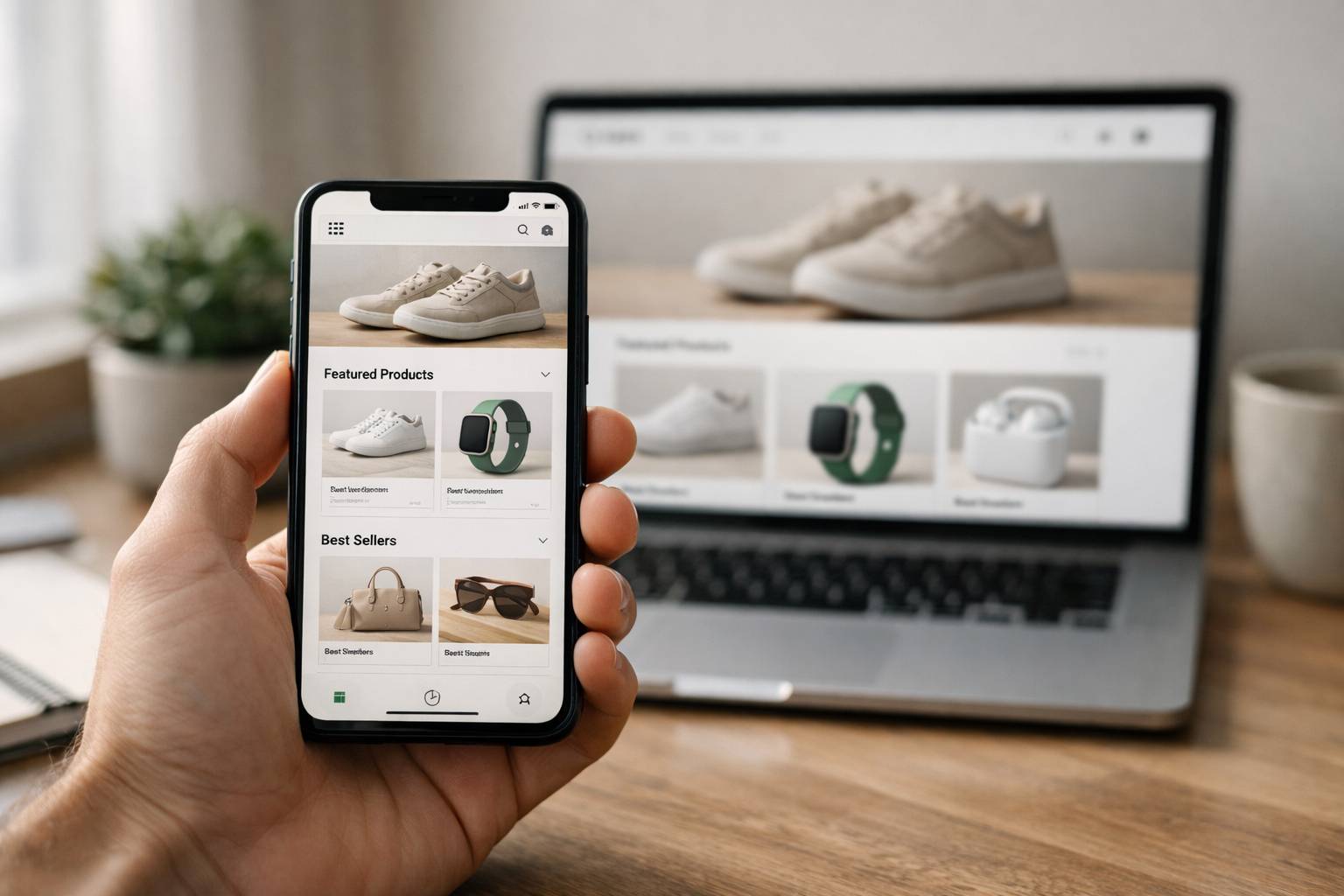
Why 79% of Shopify Traffic Comes from Mobile — And How to Optimize for It
- The Mobile Commerce Reality: Why 79% Is No Surprise
- What Happens When Your Store Isn't Mobile-Optimised?
- Core Elements of Shopify Mobile Optimization
- Mobile SEO for Shopify: Rank Higher on Google
- Use Mobile Analytics to Drive Decisions
- Partner With Shopify Mobile Experts
- Frequently Asked Questions (FAQs)
- Conclusion
If you run a Shopify store and you're not thinking mobile-first, you're already behind. According to Shopify's official commerce report, a staggering 79% of all Shopify traffic comes from mobile devices. Yet a huge chunk of store owners still design and optimise primarily for desktop — and they're losing sales because of it.
In this guide, we'll break down why mobile traffic dominates Shopify, what happens when your store isn't optimised for mobile users, and — most importantly — how to fix it with proven Shopify mobile optimization strategies that drive real results in 2026.
The Mobile Commerce Reality: Why 79% Is Not a Surprise
Mobile shopping isn't a trend — it's the default. Here's why the numbers make complete sense:
- Smartphone usage has surpassed desktop globally, with over 6.9 billion smartphone users worldwide as of 2026 (source: Statista).
- Social media platforms like Instagram, TikTok, and Pinterest — which drive massive e-commerce traffic — are primarily mobile-first apps.
- Mobile payment options like Apple Pay, Google Pay, and Shop Pay have made checkout completely frictionless on smartphones.
- Google's mobile-first indexing means Google crawls and ranks your site based on the mobile version — not desktop.
- Consumers browse and compare products on their phones throughout the day — on commutes, during breaks, and at home.
Your customers are on their phones. If your Shopify store doesn't deliver a seamless mobile experience, you're handing revenue directly to your competitors. That's why Shopify mobile optimization is non-negotiable in 2026.
What Happens When Your Store Isn't Mobile-Optimised?
Poor mobile experiences have a direct and measurable impact on your bottom line. Consider these facts before skipping your Shopify mobile optimization:
- 53% of mobile users abandon a site that takes longer than 3 seconds to load (Google, 2024)
- A 1-second delay in mobile page load reduces conversions by up to 20%
- Mobile bounce rates are 10–20% higher on poorly optimised Shopify stores
- Google penalises slow, non-mobile-friendly pages with significantly lower search rankings
- Cart abandonment rates on mobile are notably higher than desktop when checkout isn't streamlined
If your Shopify mobile optimization is lacking, you'll face higher cart abandonment, lower search rankings, reduced ad ROI, and frustrated customers who simply won't return.
Core Elements of Shopify Mobile Optimization
Choose a Mobile-First Shopify Theme
Your theme is the foundation of your mobile UX. Always choose or switch to a theme built with mobile as the primary experience:
- Use Shopify's free themes like Dawn, Craft, or Sense — all are mobile-responsive by default.
- Avoid themes with heavy animations or large visual elements that slow down mobile load times.
- Test your theme using Google's Mobile-Friendly Test before going live.
- Prioritise thumb-friendly design: large buttons, accessible menus, and easy-to-tap CTAs.
Improve Mobile Page Speed (Core Web Vitals)
Google's Core Web Vitals directly impact your Shopify SEO rankings and user experience. For mobile, target these benchmarks:
| Core Web Vital | What It Measures | Target Score |
|---|---|---|
| LCP — Largest Contentful Paint | How fast the main content loads | Under 2.5s |
| INP — Interaction to Next Paint | Responsiveness to user input | Under 200ms |
| CLS — Cumulative Layout Shift | Visual stability of the page | Below 0.1 |
To improve mobile speed as part of your Shopify mobile optimization strategy:
- Compress and serve images in WebP format using Shopify's built-in image optimisation or apps like TinyIMG.
- Reduce third-party apps and scripts — every extra app adds load time.
- Enable browser caching and leverage Shopify's built-in global CDN.
- Minimise render-blocking Liquid and JavaScript in your theme files.
Use Google PageSpeed Insights regularly to monitor and benchmark your mobile performance scores.
Optimise Your Mobile Navigation
Complex navigation kills mobile conversions. Simplify it with these proven approaches:
- Use a hamburger menu with no more than 5–7 top-level categories.
- Add a persistent search bar so shoppers can find products instantly.
- Include a sticky "Add to Cart" or "Buy Now" button that follows users as they scroll product pages.
- Ensure all footer links are spaced far enough apart for comfortable finger tapping.
Streamline the Mobile Checkout Process
Cart abandonment on mobile is significantly higher than desktop. Here's how to fix it:
- Enable Shop Pay, Apple Pay, and Google Pay for one-tap checkout.
- Reduce checkout steps — aim for a single-page or two-step checkout.
- Auto-fill address and payment forms wherever possible.
- Display trust signals prominently: security badges, money-back guarantees, and customer reviews.
- Offer a guest checkout option — forcing account creation is a major conversion killer on mobile.
For more on streamlining mobile checkouts, see the Baymard Institute's Mobile Checkout Research.
Mobile SEO for Shopify: Rank Higher on Google's Mobile Index
Shopify mobile optimization isn't just about UX — it's fundamental to your SEO strategy. Since Google uses mobile-first indexing, your mobile site's performance directly determines your rankings. Here's what to prioritise:
- Keep mobile and desktop content identical. Google crawls mobile first — if your mobile site has less content, it can hurt rankings significantly.
- Optimise meta titles and descriptions for mobile SERPs. They display shorter on mobile screens, so lead with your focus keyword early in the title.
- Use structured data (schema markup) for products, reviews, and FAQs to enable rich results in mobile Google Search.
- Ensure all images have descriptive alt text. Google's mobile crawler indexes image content and uses it for ranking signals.
- Build internal links from high-traffic mobile pages to boost crawlability and topical authority across your store.
Learn more about mobile-first indexing directly from Google Search Central.
Navigate to Search Console → Mobile Usability to see a real-time list of mobile issues Google has detected on your Shopify store — from tap targets too small to content wider than screen. Fix these systematically to protect and improve your rankings.
Use Mobile Analytics to Drive Decisions
You can't improve what you don't measure. Use these tools to monitor your Shopify mobile optimization performance:
- Google Analytics 4 (GA4): Segment traffic by device type. Compare mobile bounce rate, session duration, and conversion rate vs. desktop.
- Shopify Analytics Dashboard: Check mobile vs. desktop sales and top-performing landing pages by device category.
- Hotjar or Microsoft Clarity: Record real mobile sessions to identify exactly where users drop off or struggle to interact.
- Google Search Console: Review mobile usability issues and check which pages are ranking on mobile SERPs vs. desktop.
Review your mobile data weekly and use it to make iterative improvements. Even small UX fixes — like enlarging a button or reducing image size — can meaningfully increase mobile conversions over time.
Is Your Shopify Store Losing Mobile Sales?
Artzen Technologies is a leading Shopify development and SEO agency trusted by 800+ global clients. We specialise in end-to-end Shopify mobile optimization — from mobile-first theme customisation and Core Web Vitals improvements to mobile SEO and conversion rate optimisation. Whether you're launching a new store or scaling an existing one, our team ensures every mobile visitor becomes a customer.
Book Your Free Shopify Consultation →Frequently Asked Questions (FAQs)
Conclusion: Mobile-First Is No Longer Optional
The data is clear: mobile is where your Shopify customers live, browse, and buy. With 79% of Shopify traffic coming from mobile devices — and Google ranking your store based on its mobile performance — Shopify mobile optimization isn't a nice-to-have. It's the foundation of your entire growth strategy.
Start with the essentials: a fast, responsive mobile theme; streamlined navigation; a friction-free checkout; and a solid mobile SEO foundation. Then use analytics to continuously improve based on real user behaviour.
If you're ready to turn your mobile traffic into revenue, Artzen Technologies is here to help. With deep expertise in Shopify development, mobile SEO, and conversion rate optimisation, we build Shopify stores that don't just look great on mobile — they sell on mobile.